


ToChat - Make Friends Nearby
3.9318.00 Reviews
App Specs
- Version
- 1.34
- Updated On
- License
- Free
- Downloads
- 1,000,000+
- Developer
- Team ToChat
- Categories
- Social
- Platform
- Android
Screenshots

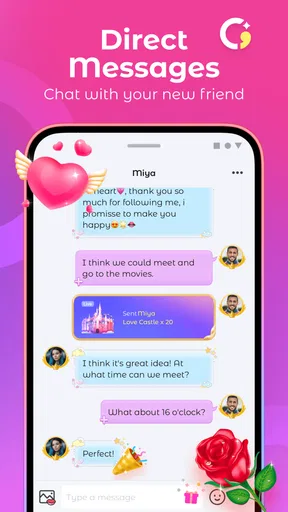

 Analysis by AppCompare
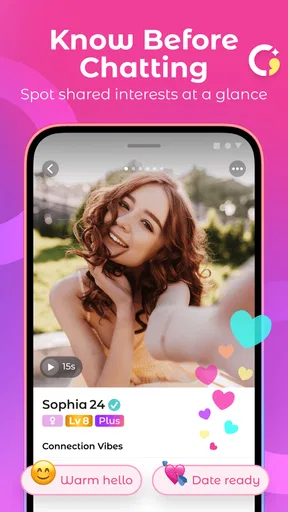
I approached ToChat - Make Friends Nearby as a social app for people who want conversations to begin with shared interests rather than a completely blank profile. Its basic idea is easy to understand: find people whose interests, general vibe, or chat style feels compatible, then decide whether a conversation is worth continuing. In my experience, that makes it more focused than opening a broad social network and hoping the right person appears in a crowded feed.
ToChat is free to install, although it includes optional purchases ranging from under a dollar to well over a hundred dollars for individual items. It is listed for mature users aged seventeen and above, so I would not treat it as a casual children’s messaging app. The app comes from Team ToChat, has passed the million-install mark, and currently sits at a 3.9 average from roughly fifteen thousand ratings. Those figures suggest a sizeable audience, but also a mixed experience: enough people find value in the concept, while others may run into the normal unpredictability of meeting strangers online.
How I would use ToChat from the first launch
The most sensible starting point is to treat the app as a conversation-discovery tool, not as a guaranteed friendship machine. I would begin by making my interests and preferred conversation style clear, because vague information gives other users very little to respond to. A short, specific profile works better than trying to sound impressive. Mentioning the kinds of topics I enjoy, the tone I prefer, or whether I like quick exchanges or longer chats gives a potential match an easy opening.
That approach also helps me judge the quality of incoming conversations. If someone responds to a genuine interest rather than sending a generic greeting, there is already a small reason to continue. On the other hand, I would not assume that a shared interest automatically means compatible personalities. Two people may both enjoy the same subject but want completely different kinds of interaction, and ToChat’s matching idea cannot remove that human variable.
For an everyday example, imagine finishing work and wanting to talk about a niche hobby that friends nearby do not follow. Instead of posting publicly on a large network, I could use ToChat to look for people who are already likely to understand the subject. I would open with one concrete question, see whether the reply has effort behind it, and move on quickly if the exchange feels forced. That small habit keeps the app from turning into a tiring search through endless low-value chats.
What makes the first conversation easier
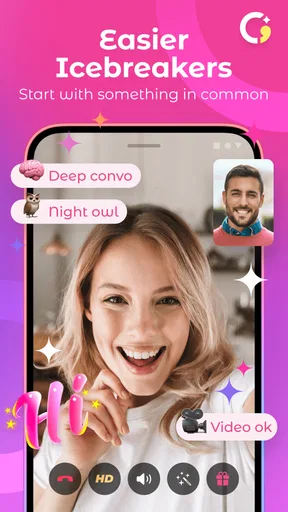
I found that the best opening is neither a formal introduction nor an overly personal question. A message connected to a visible interest gives the other person a comfortable choice: answer the question, expand on the topic, or show that they are not interested. This is more useful than sending several messages in a row while waiting for attention.
I would also avoid treating every new contact as a commitment. The app is most enjoyable when I allow conversations to develop naturally. Some will end after a few messages, and that is not necessarily a failure. A social discovery app has value when it helps me find a few promising exchanges, not when it turns every contact into a permanent connection.
Worth Reading Before You Choose

EA SPORTS FC Mobile 26 Is a Bigger Football Game, but It Takes Time

Flipboard Shows What News Apps Must Do Beyond the Feed

Switching to Android Auto Means Rethinking Your Driving Routine

Google Calendar Makes a Crowded Week Easier to Manage

Ludo King Makes the Most of the Minutes Between Plans

Baby Panda World Brings Quick Play to Modern Phones, but Its Game Library Feels Busy
Because the audience is mature, I would keep normal online-safety habits in place. I would not share an address, workplace details, financial information, private documents, or anything that could identify my routine. I would also be cautious about moving a conversation elsewhere too quickly. A friendly tone is not proof of trust, and the app’s social format makes it important to judge behavior over time.
Settings and choices that deserve attention
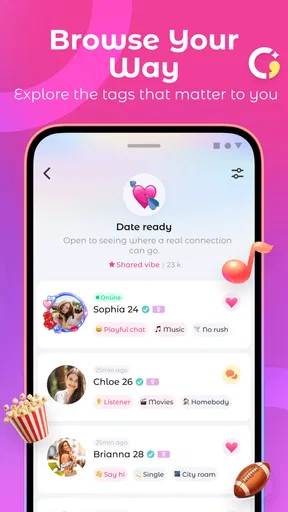
Before spending much time chatting, I would review every visible profile, discovery, notification, and privacy option. The useful question is not simply “what can I turn on?” but “what kind of attention do I want to receive?” A wider discovery approach may produce more opportunities, while a more selective setup can reduce irrelevant conversations. The right balance depends on whether I am exploring casually or looking for a particular kind of connection.
Notifications are another area where a little restraint improves the experience. Social apps can become distracting when every new message interrupts the day. I prefer alerts that help me notice meaningful activity without encouraging constant checking. If ToChat offers separate controls for different notification types on my device, I would keep only the ones that support actual conversations and silence the rest. That makes the app feel like something I use deliberately rather than something that constantly pulls me back.
I would pay attention to how much profile information is publicly visible before adding personal details. A strong profile does not need to reveal a full name, exact location, daily schedule, or other identifying information. Specific interests can make conversation easier without exposing the parts of my life that should remain private. This is one of the most practical trade-offs in a nearby-friend app: being too vague makes discovery harder, while being too revealing creates unnecessary risk.
It is also worth checking how in-app purchases appear during normal use. ToChat is free, but optional items can cost from $0.99 to $159.99 each. I would decide in advance whether I am comfortable paying for extras and would avoid making a purchase simply because I feel ignored or want faster results. Spending cannot manufacture compatibility, and a paid action is only worthwhile if it provides a clear benefit that fits my personal use of the app.
Repeatable habits for less effort
Experienced use is less about sending more messages and more about making each interaction easier to evaluate. I would set aside a short time to browse, start a small number of conversations, and then leave the app. That routine prevents the familiar social-app trap of scrolling for a long time without forming a meaningful connection.
One useful pattern is to prepare a few natural conversation starters based on my own interests. I do not mean copying the same message to everyone. I mean having a mental list of subjects I genuinely enjoy, so I can respond quickly when a profile gives me an opening. This reduces awkward small talk and makes it easier to notice whether the other person is contributing or merely reacting.
I would also use a simple stopping rule: if a conversation repeatedly feels one-sided, confusing, or pressuring, I stop investing energy. That rule matters because social apps can make users feel that every unanswered message needs another attempt. In reality, a respectful exit is often better than trying to rescue a connection that has no momentum.
Another practical habit is to separate discovery from trust. At the discovery stage, I can be open to meeting people with different backgrounds and conversation styles. At the trust stage, I should look for consistent behavior, respect for boundaries, and a willingness to communicate without pressure. Keeping those stages separate helps me enjoy the app’s social possibilities without assuming that a pleasant first exchange means I know someone well.
If I find a particularly good topic, I would let the conversation become more specific instead of jumping immediately into personal questions. Discussing a project, recommendation, opinion, or shared interest gives both people room to show personality. This is a more reliable test of compatibility than trying to force instant closeness.
Where the experience can become frustrating
The central promise of finding people with a similar vibe sounds appealing, but “vibe” is difficult to measure consistently. A profile may look compatible while the actual conversation feels flat. The reverse can happen too: someone with a modest profile may turn out to be a thoughtful conversationalist. I would therefore use the app’s discovery tools as a starting point, not as a final judgment.
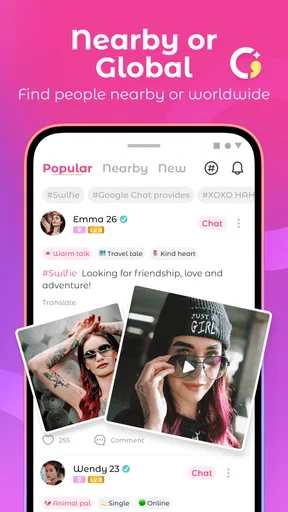
The nearby-social angle may also be a weakness for users who prefer complete distance from their local area. Someone who wants anonymous, topic-based discussion with no sense of geographic connection may be better served by a large interest forum or a conventional messaging community. ToChat makes more sense when the possibility of meeting or building a locally relevant connection is part of the appeal.
It is not the right choice for someone seeking a tightly moderated professional network, a formal dating service, or a guaranteed activity partner. Those goals require different signals and expectations. ToChat’s strength is the informal middle ground between shared interests and casual conversation, but that flexibility also means users need to do more of their own filtering.
The age classification matters here. Since it is intended for mature users, parents looking for a supervised social environment for younger teenagers should choose a service designed specifically around that need. Likewise, anyone uncomfortable with adult-oriented social spaces should not install it simply because the basic idea of making friends sounds harmless.
How it compares with familiar alternatives
Compared with a general social network, ToChat feels more purposeful at the beginning because the conversation is supposed to grow from common interests and communication preferences. A broad network is usually better for following people I already know, keeping up with public posts, or maintaining an established community. ToChat is more appealing when I want to discover someone new without relying on an existing social circle.
Compared with a large discussion forum, the experience is more personal and direct. Forums are often better for collecting detailed answers, browsing long-running topics, and learning from a large group. ToChat is better suited to one-to-one interaction, but that also means the quality of each exchange depends heavily on the individual person I encounter.
Compared with a dating-focused service, ToChat is less useful if romance is my only objective. Its interest-and-chat approach can support new connections, but I would not assume that every person is looking for the same type of relationship. Clear communication is especially important when intentions may differ.
Compared with ordinary text messaging, ToChat helps with discovery but cannot replace the comfort and reliability of contacts I already trust. I would use it to find promising conversations, then decide carefully whether a connection deserves a more regular place in my communication routine.
What the version and device requirements mean in practice
The current version is 1.34, and the app supports devices running Android 6.0 or later. That broad minimum makes it accessible to people using older Android hardware, although the actual experience will still depend on the phone’s performance, storage, connection, and notification behavior. On an older device, I would keep expectations realistic when switching quickly between chats or using the app alongside other demanding applications.
Since ToChat is free to start, the easiest way to judge it is to use the basic experience before considering any optional purchase. I would spend enough time learning how discovery works, how comfortable the conversations feel, and whether the audience matches my interests. If those fundamentals do not work, buying extras is unlikely to solve the underlying problem.
The rating of 3.9 from about fifteen thousand ratings gives me a balanced expectation rather than a reason to dismiss the app. It indicates that ToChat has reached enough users to develop a recognizable reputation, but it is not a universal fit. The roughly three hundred reviews add context to that mixed picture: social apps naturally produce very different reactions because users bring different expectations, locations, interests, and tolerance for casual conversation.
My final take after using it as a social discovery tool
I see ToChat as a reasonable option for adults who want to meet people through shared interests and a compatible conversational mood. Its best use is intentional: create a clear but private profile, choose discovery preferences carefully, start a few specific conversations, and judge people by how they communicate rather than by a matching label alone.
The biggest strength is the focused starting point; the biggest limitation is that no setting can guarantee a genuinely compatible person. That trade-off is important. The app can reduce the awkwardness of meeting strangers, but it still asks me to filter, set boundaries, and accept that many conversations will not continue.
I would recommend trying the free version to someone who is curious, patient, and comfortable with mature social spaces. I would skip it in favor of a specialist community if I wanted deep technical discussion, strict identity controls, professional networking, or a clearly defined romantic purpose. For the right user, Team ToChat’s app offers a more directed alternative to shouting into a general social feed. For everyone else, its value may depend too much on the local audience and on how actively they are willing to manage their own experience.
Pros
- Simple interface makes discovering nearby people quick and approachable.
- Useful for finding conversation partners with shared interests.
- Chatting can help newcomers feel more connected in a new area.
- Profile-based discovery gives users some control over whom to contact.
- Suitable for casual conversations without requiring a long-term commitment.
Cons
- Location-based matching may raise privacy concerns for cautious users.
- The quality of conversations can vary significantly between profiles.
- Some nearby areas may have too few active users to be useful.
- Unexpected messages or unwanted attention may require frequent blocking.
- Features and activity may depend heavily on the local user community.
FAQs for ToChat - Make Friends Nearby
What is ToChat - Make Friends Nearby?
ToChat - Make Friends Nearby is a social networking app designed to help people discover and communicate with users in their area. After creating a profile, you can browse nearby members, start conversations, and potentially meet people with similar interests. The experience depends heavily on the number of active users around your location, so availability and interaction quality may vary between cities and regions.
How does ToChat help me find people nearby?
The app generally uses your location, profile information, and discovery preferences to show potentially compatible users in your surrounding area. You may be able to view basic details before deciding whether to interact. Location-based matching can be useful for making local connections, but users should review the app’s permission settings and avoid sharing precise personal information until they are comfortable with a new contact.
Is ToChat - Make Friends Nearby free to use?
ToChat can typically be downloaded without an upfront charge, although some features may depend on the app’s current subscription model, advertising system, or optional in-app purchases. Before using premium tools, check the store listing and payment screen carefully for pricing, renewal terms, and cancellation instructions. Availability of specific free and paid features may also change with future updates.
Is ToChat safe for meeting or chatting with strangers?
ToChat includes the usual risks associated with location-based social apps because conversations involve people you may not know in real life. Avoid sharing your home address, workplace, financial details, passwords, or private photographs. Use blocking and reporting tools when available, remain alert for suspicious behavior, and arrange any first meeting in a busy public place while informing someone you trust.
What permissions and account information does ToChat require?
Depending on the version and features you use, ToChat may request access to information such as your location, notifications, camera, photos, or microphone. Some permissions may be optional, while others can support profile creation, messaging, or nearby discovery. Review the privacy policy and your device settings before granting access, and disable permissions that are not necessary for the way you plan to use the app.


